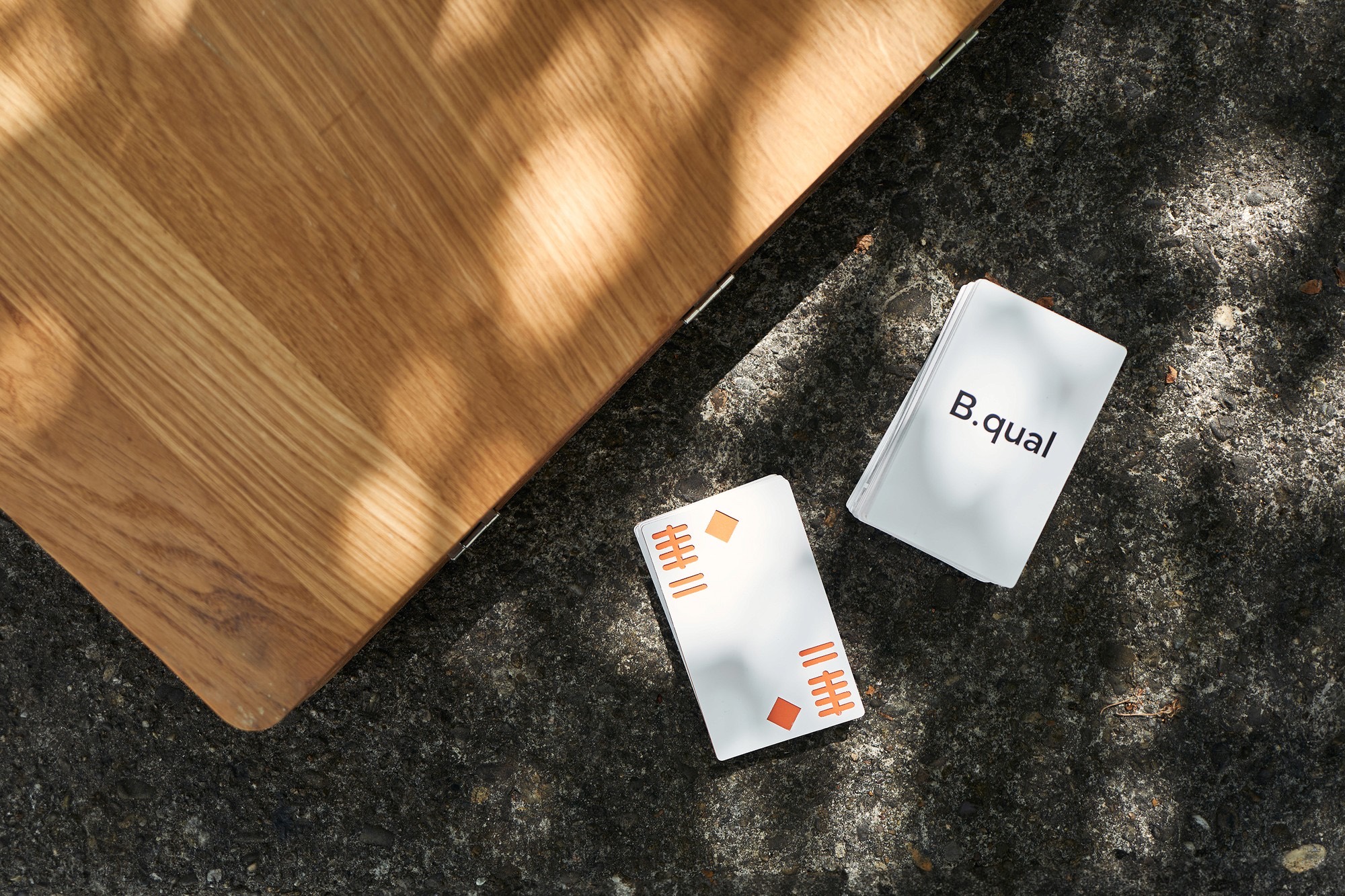
Two games that blind, visually impaired and sighted people play at the same table.
How can games include visually impaired people and start conversations?
Project summary
B.qual is a backgammon board and a redesigned 52-card deck, built to be played equally by touch and by sight. Rather than “adding Braille” to existing games, we rethought them for the casual setting of a board-game café.
At first, we thought the biggest challenge for visually impaired people was navigating cities or poor signage. But after meeting with a local group of blind and visually impaired people, we realised the real issue lies in how sighted people interact with them.
Distance through discomfort. Many avoid contact out of discomfort or fear of doing something wrong. What’s meant as politeness — stepping aside, not offering help — often creates social distance. One woman told us her friends sometimes avoid her on the street, not even saying hello.
How can we create opportunities for understanding disabilities — to break down social barriers, not just physical ones?
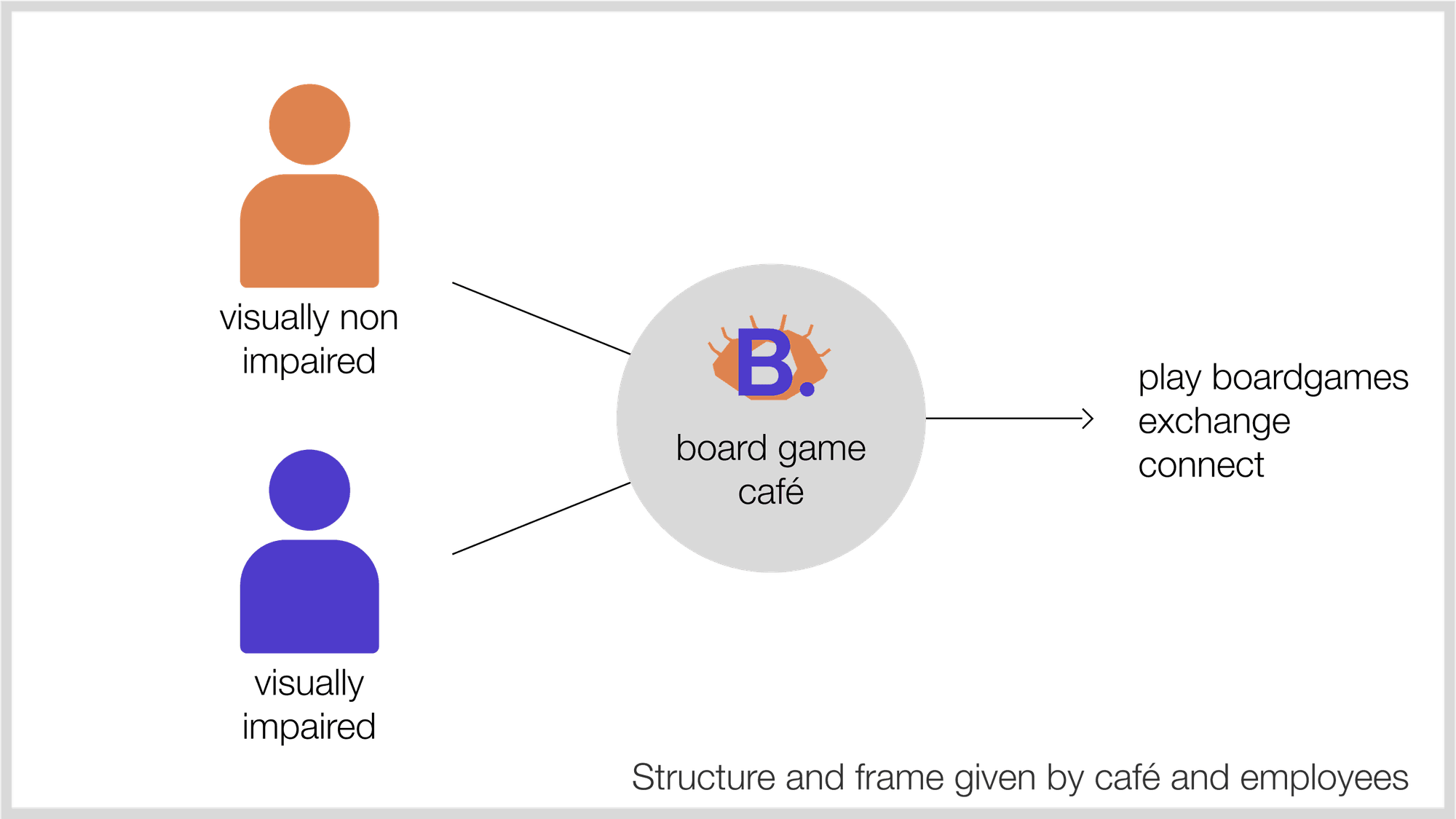
Space for genuine encounters. We wanted a place where blind, visually impaired and sighted people meet naturally — without pressure, without appointments. A place people visit voluntarily, where connection happens through a shared activity.
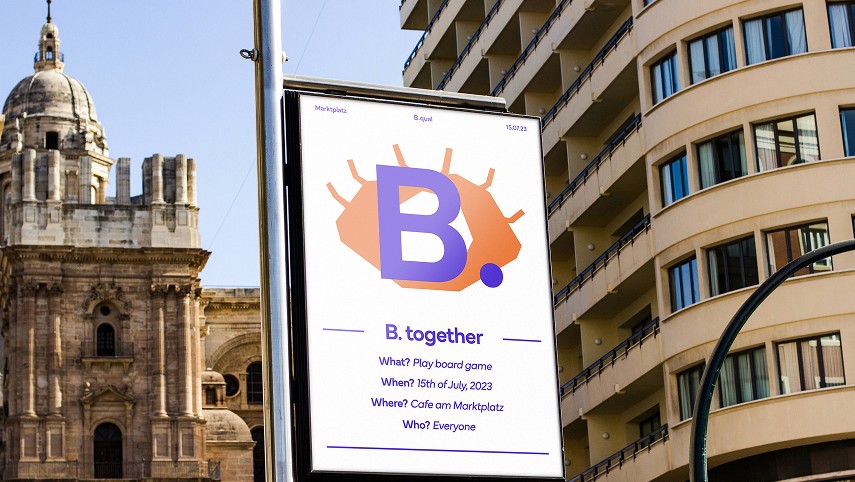
These cafés already exist as welcoming, casual places. Over a game or a cup of coffee, conversation flows easily. It’s not about helping or being helped — it’s about being together.
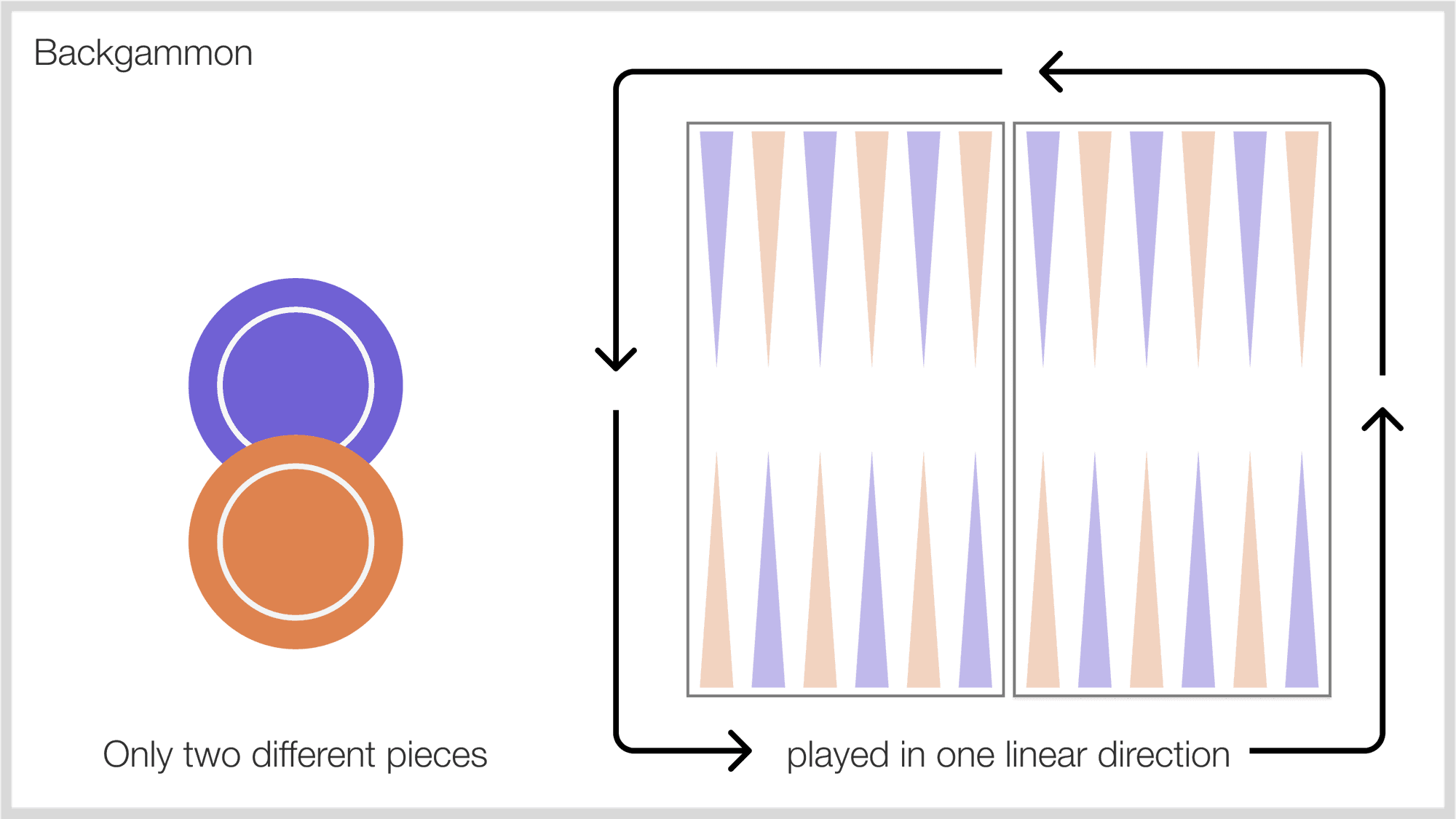
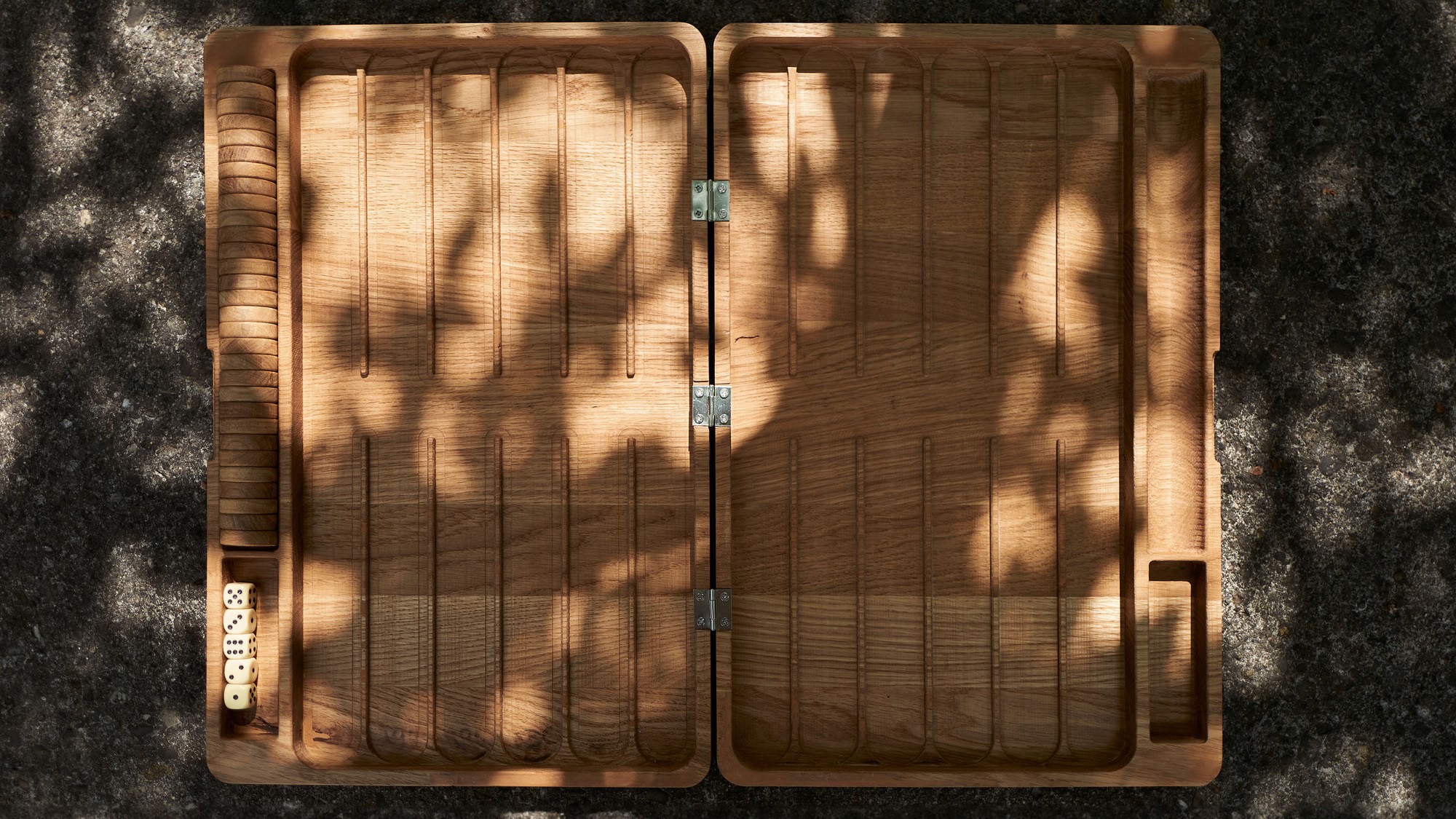
Backgammon is linear, direction-based and uses only two kinds of pieces. That makes positions easy to track by touch, while the game keeps its strategic depth.
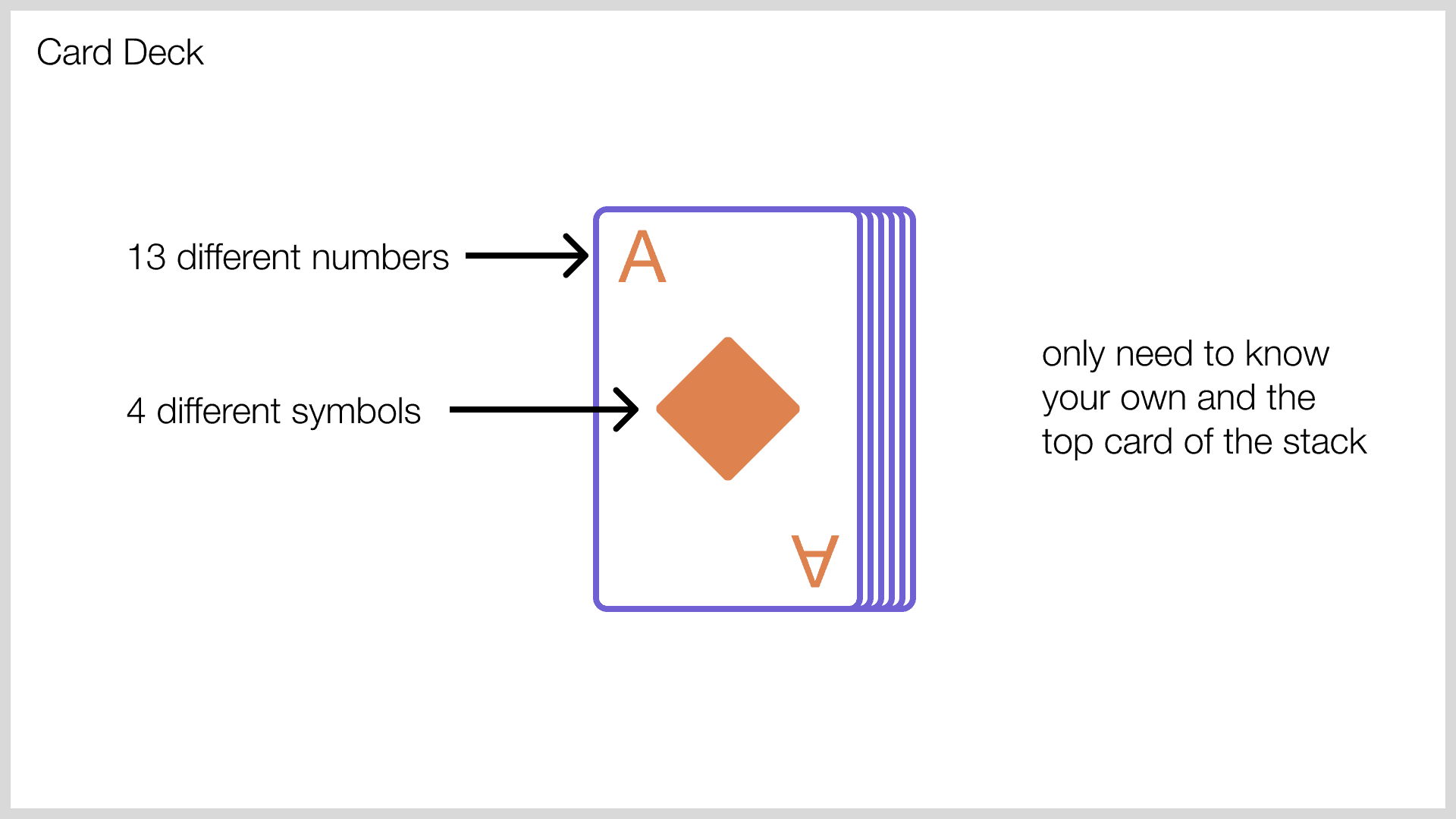
A classic 52-card deck unlocks a wide range of games. Card games are easy to learn, social and adaptable — ideal for informal play across different levels of sight.
Designing something that works equally for blind and sighted players is not a matter of simply “adding Braille”. We needed games that communicate through both touch and sight, without compromising either experience.
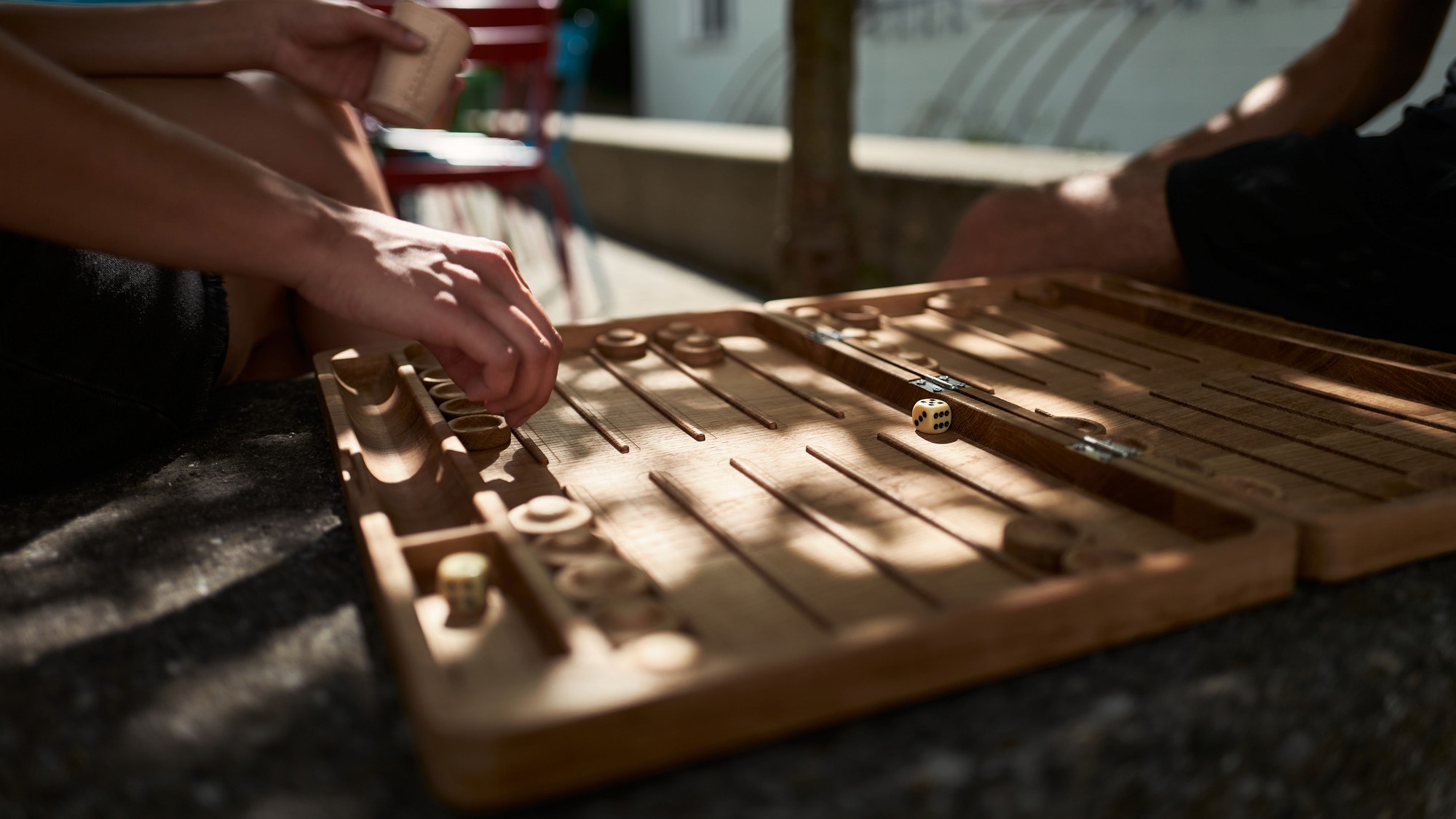
Touch must not change the game. Many board games rely on a visual overview. For blind players, exploring the board by hand must not disturb the game state — nothing should shift or tip over. The layout also has to stay clear and predictable while feeling around.
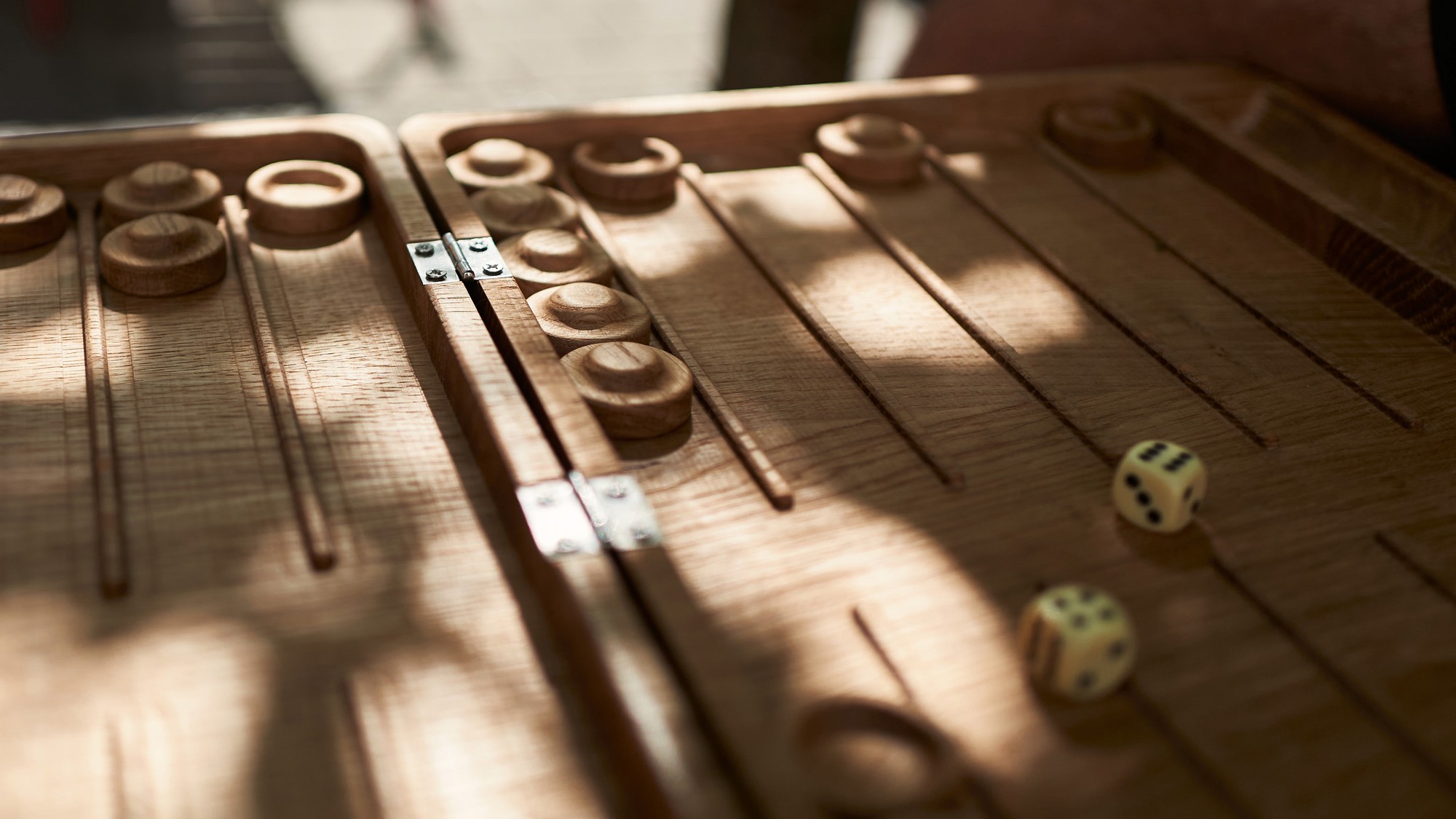
Two surfaces, one touch. The board is made mainly of wood, warm to the hand. One set of pieces is concave, the other convex, so they are easy to tell apart without sight.
Rails, not lines. Thin wooden rails divide the fields. They separate the spaces visually and keep pieces in place while hands explore the surface, so blind players can orient themselves freely without disrupting the game.
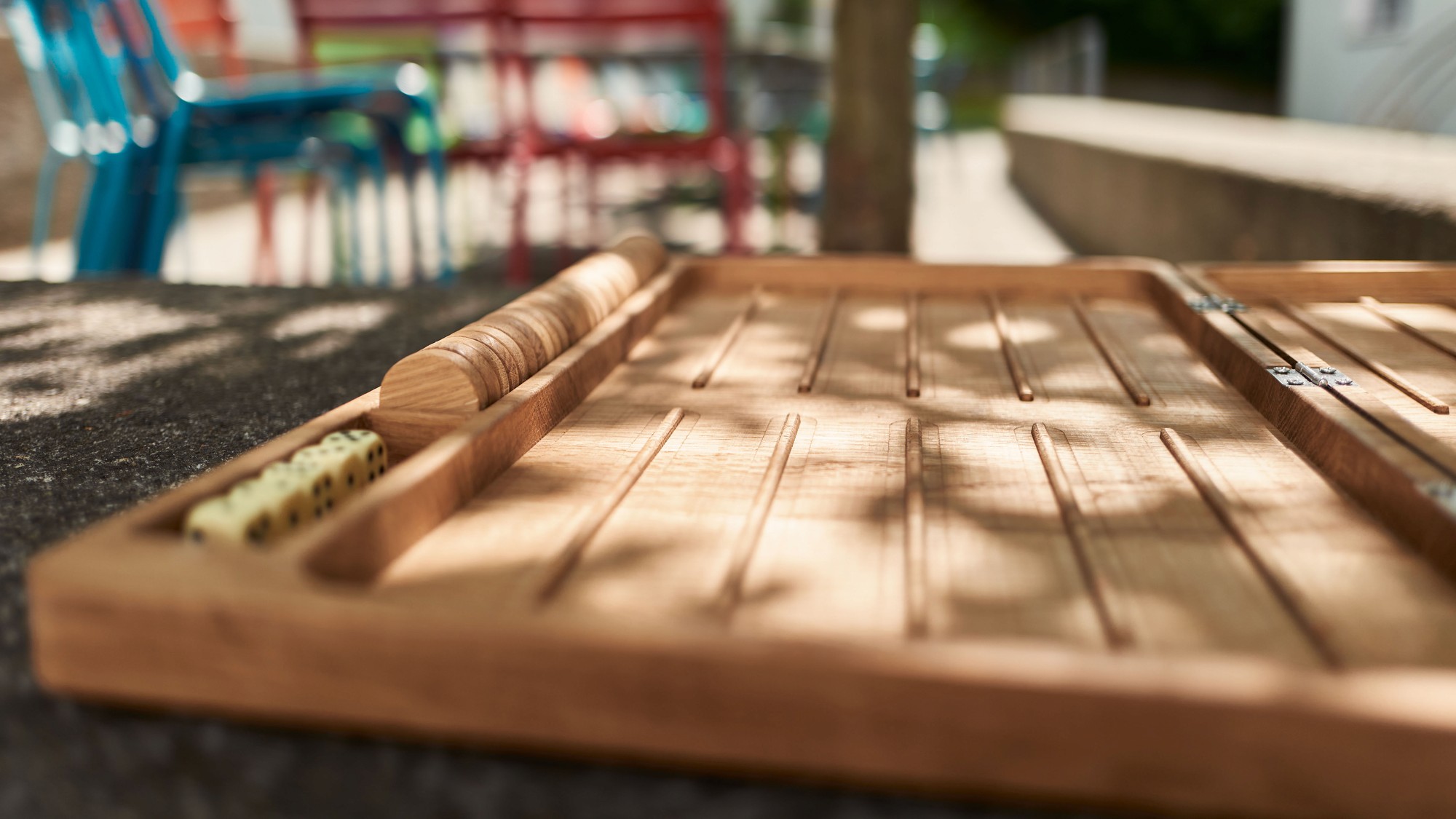
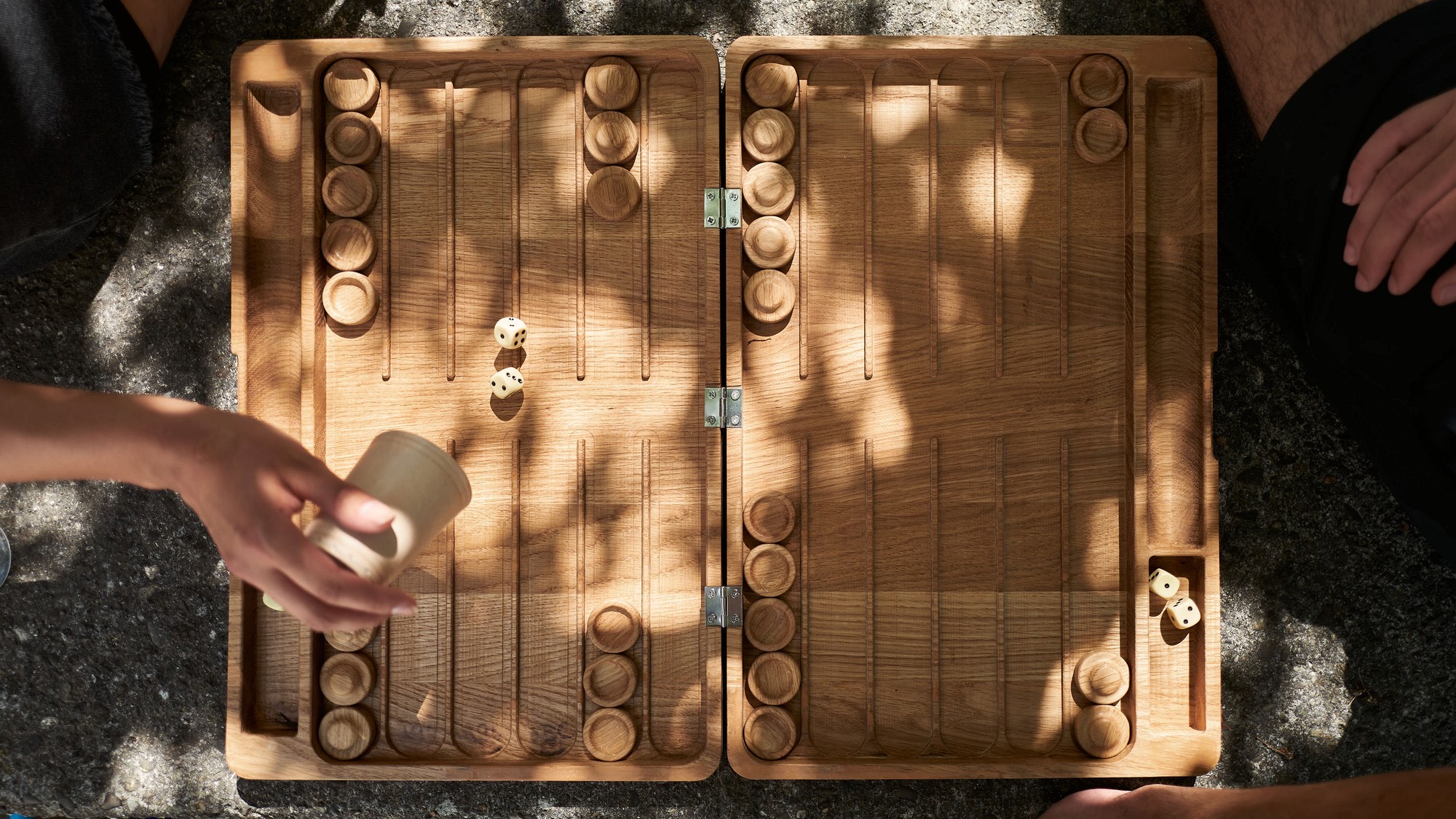
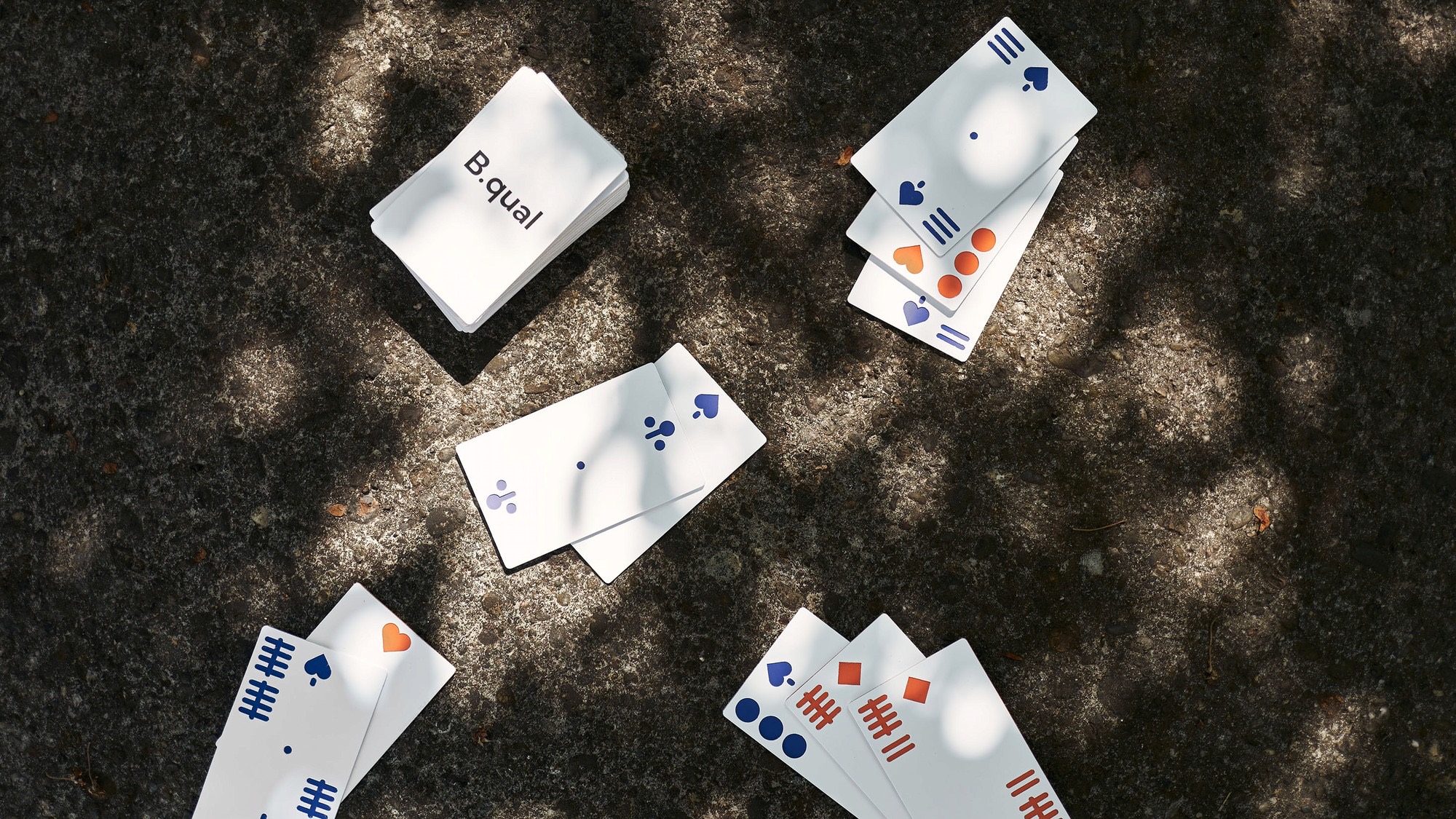
Three layers combine tactile access with visual clarity:
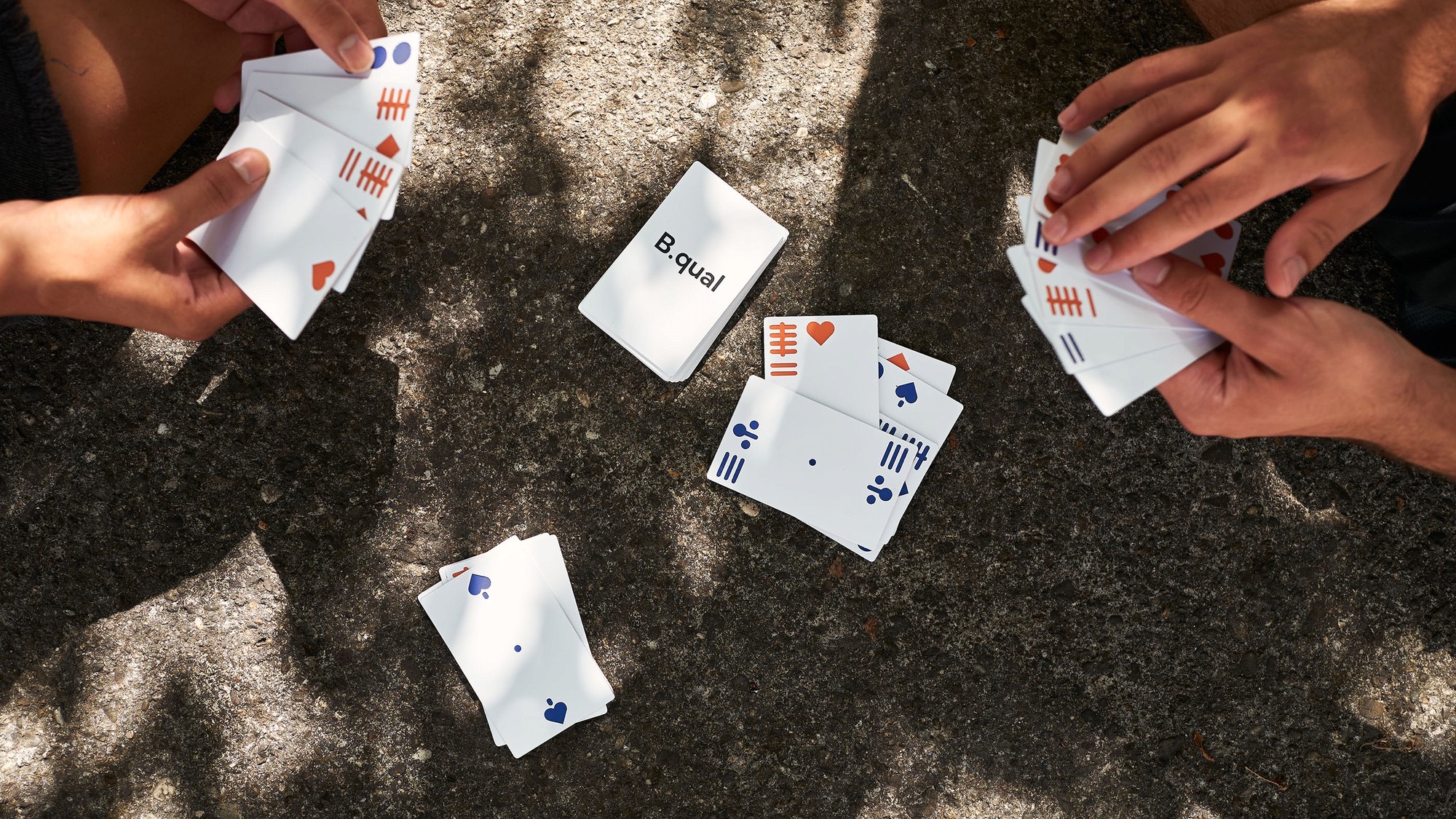
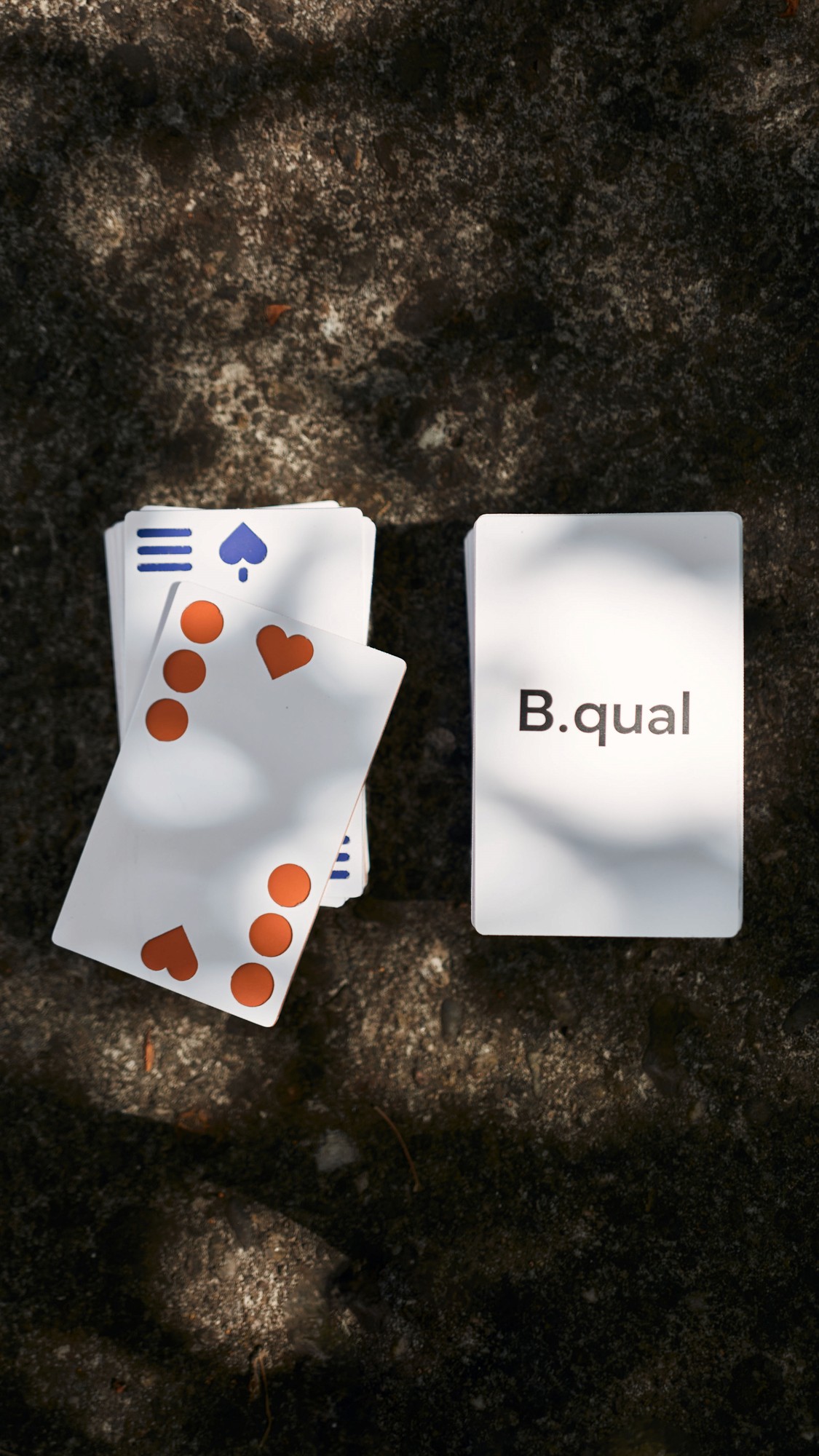
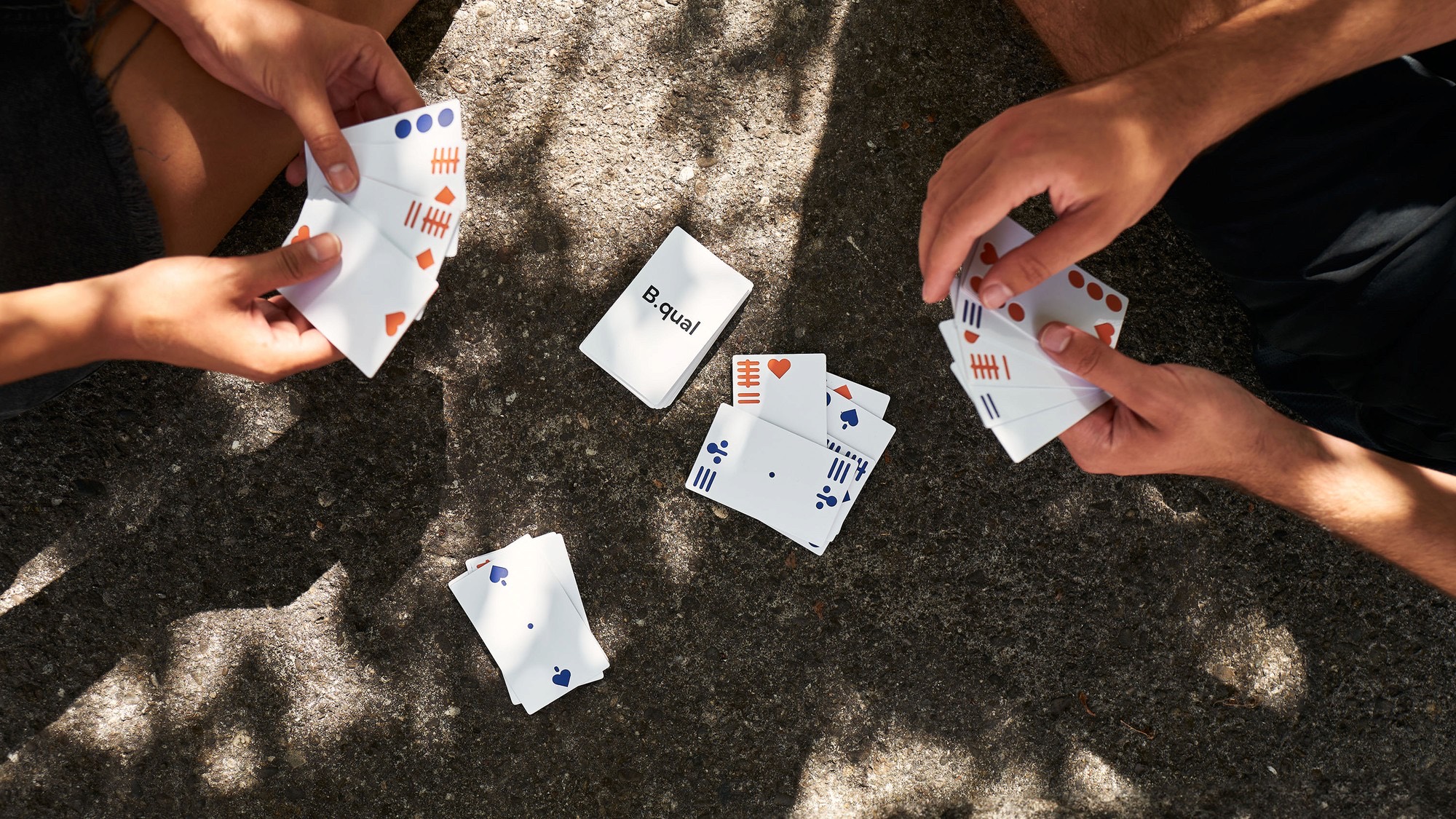
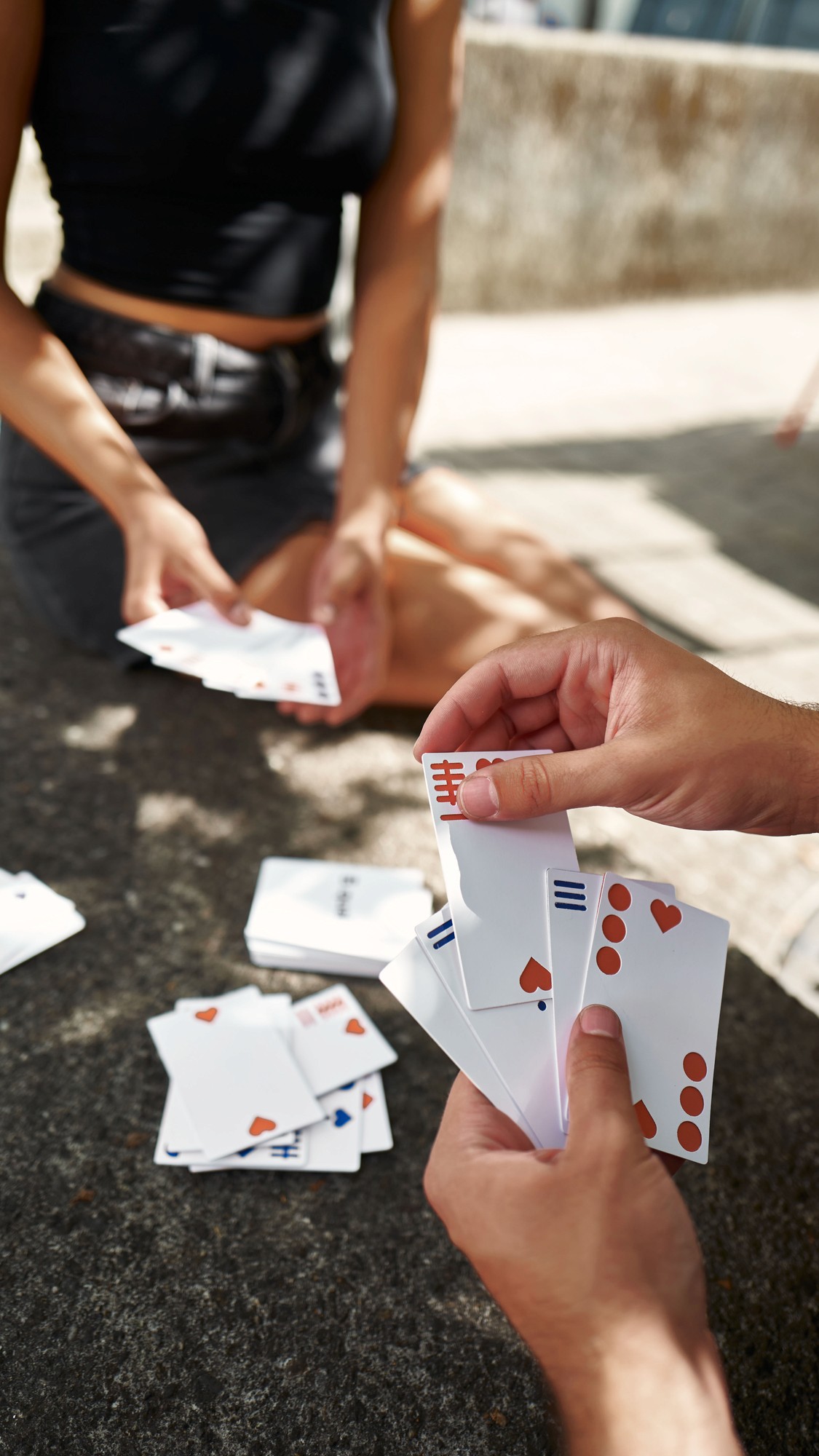
Tally marks instead of numerals. Values are vertical lines grouped in fives — easier to read by touch than printed numbers, and still intuitive by sight. Jack to King are one to three raised circles.
Where you expect it. The value sits in the top-left corner, as on conventional cards. Suit symbols are simplified so they stay recognisable by sight but clearly differ by touch. Black cards carry a small raised circle in the centre, for sorting by colour without sight.